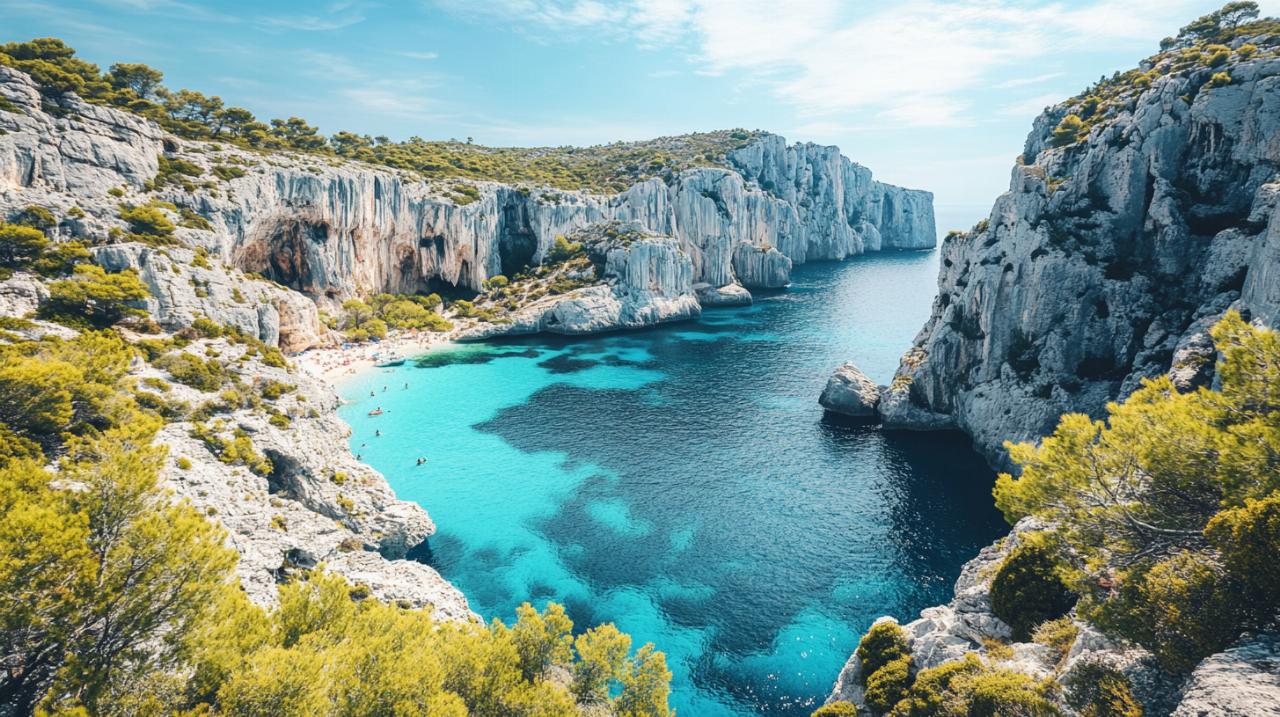
Nestled along the sun-drenched shores of southern France, where the rugged terrain meets the sparkling Mediterranean, lies a natural wonder that captivates every visitor who ventures into its embrace. The Calanques National Park, a breathtaking expanse of dramatic landscapes and crystalline waters, stretches between the vibrant city of Marseille and the charming coastal towns of Cassis and La Ciotat. Established in 2012, this remarkable reserve holds the distinction of being the tenth national park in France and the first in Europe to encompass both terrestrial and marine environments, spanning over eight thousand five hundred hectares on land and forty-three thousand five hundred hectares beneath the waves. With its limestone cliffs rising majestically from turquoise coves and more than twenty-five calanques dotting the coastline, this protected area offers an unparalleled glimpse into the natural splendour of Provence. Each year, the park welcomes over two million visitors who come to explore its hidden treasures, hike its scenic trails, and immerse themselves in a landscape shaped over millions of years by the forces of nature and the passage of time.
Discovering the Dramatic Landscapes Between Marseille and Cassis
Limestone cliffs and turquoise waters: nature's masterpiece
The geological story of the Calanques National Park is one written across aeons, with rocks that date back over one hundred million years. These ancient formations emerged some sixty million years ago when the African and European tectonic plates converged, forcing the land upwards and creating the striking cliffs that define the region today. Twenty thousand years ago, the sea itself lay fifteen to twenty kilometres beyond Marseille, a reminder of the ever-changing relationship between land and water. The highest point in the park, Mont Puget, towers at five hundred and sixty-three metres, offering panoramic vistas that sweep across the coastline and out to the horizon. The turquoise coves that nestle between the cliffs are famed for their otherworldly beauty, their waters so clear that sunlight filters through to reveal the sandy or rocky beds below. Among the most celebrated of these is En-Vau, often hailed as the pearl of the Calanques, where narrow inlets framed by towering white walls create a scene of extraordinary tranquillity. Sormiou, the largest in Marseille, boasts a sandy beach that invites families and sun-seekers alike, while Morgiou is home to the enchanting Blue Grotto, a sea cave that glows with ethereal light. Sugiton, with its striking rock formations, has become so popular that a reservation system is now in place to manage visitor numbers. Port-Pin, meanwhile, offers a more family-friendly setting, its shallow waters and gentle shores perfect for younger adventurers. Beyond the mainland, the Frioul archipelago adds yet another dimension to the park, its islands accessible year-round by ferry and offering a different perspective on this diverse coastal ecosystem.
The cultural tapestry of southern france's coastal gem
The Calanques National Park is not merely a natural sanctuary but also a repository of cultural and historical heritage. Deep beneath the waves, at a depth of forty metres, lies the Cosquer cave, a submerged archaeological site adorned with prehistoric art that offers a tantalising glimpse into the lives of those who inhabited this region millennia ago. On land, remnants of the past are equally evocative. The Blockhaus des Goudes, a fortification dating from the Second World War, now stands as a silent sentinel overlooking the sea, popular among those who rise early to witness the sunrise painting the sky in hues of gold and rose. The park's biodiversity is equally remarkable. Over eighty bird species have been recorded within its boundaries, their calls echoing across the cliffs and coves. The park is also home to the largest lizard in Europe, a creature that can reach lengths of eighty centimetres, as well as nine hundred plant species, thirty-eight of which are protected and forty-three recognised as remarkable. Beneath the surface, more than sixty marine heritage species contribute to an underwater tapestry of life that is as fragile as it is magnificent. This rich variety of flora and fauna underscores the importance of the park's dual mandate: to protect a fragile ecosystem while also allowing visitors to experience its wonders. Balancing environmental stewardship with public access is a challenge that the park's managers take seriously, implementing measures that ensure the preservation of this unique landscape for future generations.
Best Times to Hike and Explore the Calanques Throughout the Year
Spring and Autumn: Ideal Conditions for Trail Adventures
For those eager to explore the park on foot, spring and autumn emerge as the most favourable seasons. During these months, the weather is mild and the trails are at their most accessible, free from the intense heat and fire risk that characterise the summer months. The landscape bursts into colour in spring, as wildflowers bloom across the hillsides and the Mediterranean breeze carries the scent of herbs and salt. Autumn, meanwhile, offers its own rewards, with cooler temperatures and fewer crowds allowing for a more contemplative experience. Hiking is one of the main activities in the Calanques National Park, with trails that cater to all levels of ability and ambition. The GR98-51, a long-distance path that traverses the entire park, can be completed in three days, offering an immersive journey through some of the most stunning scenery in southern France. For those seeking shorter excursions, the hike from Callelongue port to Sormiou takes approximately three hours, winding through rocky terrain and offering breathtaking views of the coast. Another popular route leads to the Croix de Marseilleveyre, a four hundred and thirty-three-metre peak that rewards hikers with sweeping vistas and a sense of accomplishment after a three-hour round trip. It is essential to come prepared for these adventures. Sturdy hiking boots are highly recommended, as the paths can be steep and uneven, and visitors should carry ample water, sun cream, and a map to ensure a safe and enjoyable experience.
Summer restrictions and winter wonders: planning your visit
The summer months bring their own set of considerations for those wishing to visit the Calanques National Park. From the first of June to the thirtieth of September, access to certain areas is regulated due to the heightened risk of fire, a precaution that reflects the park's commitment to protecting its vulnerable ecosystem. A colour-coded system, ranging from green to red, indicates the level of access permitted on any given day. On red alert days, many trails and roads are closed to the public, while yellow and orange alerts signal varying degrees of restriction. Car access is particularly limited during this period, with roads to Sormiou, Morgiou, and Callelongue often closed from seven in the morning until seven in the evening on weekends from April onwards, and daily throughout the peak summer months. Visitors are encouraged to check the park's website before setting out to ensure they are aware of any closures or restrictions. Winter, by contrast, offers a quieter and more contemplative experience. The cooler temperatures make for comfortable hiking conditions, and the park's natural beauty takes on a different character under the softer light of the shorter days. Ferries to the Frioul islands operate year-round, providing a reliable means of access to these offshore treasures, while boats to Les Goudes run from April to October, allowing for exploration of the coastal calanques during the warmer months. For those who prefer to experience the park from the water, boat trips accommodating between eight and two hundred and fifty passengers are available, offering a unique vantage point from which to admire the towering cliffs and hidden coves that define this extraordinary landscape.
Beach hopping and hidden coves: coastal treasures await
Secluded sandy stretches and crystal-clear swimming spots
The allure of the Calanques National Park extends beyond its hiking trails and geological wonders to the inviting beaches and swimming spots that lie tucked within its coves. Each calanque possesses its own distinct character, shaped by the interplay of rock, water, and light. Sormiou, with its expansive sandy beach, is a favourite among families and groups seeking a place to relax and swim in the gentle embrace of the Mediterranean. En-Vau, though more challenging to reach, rewards the effort with a setting of unparalleled beauty, its narrow strip of pebbles flanked by soaring cliffs that cast dramatic shadows across the water. Morgiou offers not only a lovely beach but also access to the Blue Grotto, a sea cave where the play of light creates an almost magical ambience. Port-Pin is particularly well-suited for families with young children, its shallow, clear waters providing a safe and welcoming environment for paddling and exploration. Sugiton, with its striking geological formations and vibrant turquoise hues, has become a must-visit destination, though the introduction of a reservation system reflects the need to manage the impact of its popularity. Beyond the mainland, the Frioul archipelago presents yet more opportunities for beach lovers. Accessible by ferry from Marseille, these islands offer a different perspective on the region, their shores less crowded and their waters equally inviting. Whether you seek a lively spot to soak up the sun or a secluded nook for quiet contemplation, the calanques provide a wealth of options.
Access Points and Local Tips for the Perfect Day by the Sea
Getting to the Calanques National Park is straightforward, with a variety of transport options available to suit different preferences and budgets. Buses serve several key points, including routes 19, 23, 22, B1, and 21J, making it easy to reach the park from Marseille and surrounding areas. Ferries depart from the Vieux Port and Pointe Rouge, offering scenic journeys to the Frioul islands and Les Goudes, with prices starting from seventy-nine euros per person. For those who prefer a more active approach, bicycles, both muscular and electric, can be hired from forty-five euros per person, allowing for a leisurely exploration of the coastal roads and pathways. Car access, as mentioned, is restricted during certain periods, particularly on weekends and throughout the summer months, so planning ahead is essential. For visitors looking to make the most of their time in the region, CityPasses are available from thirty-six euros, offering savings on transport and entrance fees to various attractions. Accommodation options abound, with Marseille, Cassis, and La Ciotat all providing a range of choices from bed and breakfasts to seasonal rentals, residences, and hotels. Staying in one of these towns not only offers convenience but also the opportunity to experience the local culture, cuisine, and hospitality that make Provence such a cherished destination. The park itself is open year-round, weather and fire risk permitting, and visitors are encouraged to respect the rules and guidelines in place to protect this fragile environment. Camping is not permitted within the park, a measure that helps preserve its natural state and ensures that future generations can enjoy its splendour as we do today. Whether you arrive by bus, ferry, bicycle, or on foot, the Calanques National Park promises an experience of profound beauty and connection with the natural world, a jewel of southern France that shines brightest when explored with care and reverence.