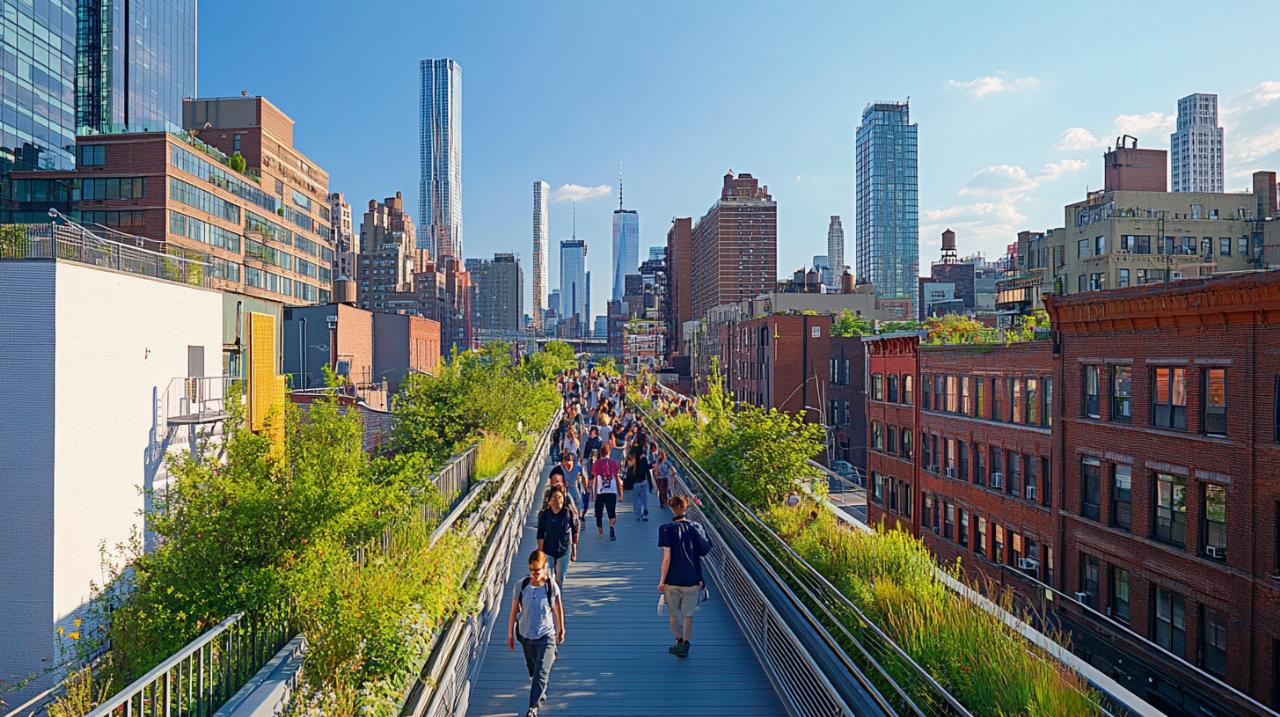
In the heart of Manhattan, an old railway line that once carried freight trains through the industrial landscape of the West Side has been reborn as one of the most celebrated public spaces in the world. The High Line stands as a remarkable example of how visionary urban planning and community determination can transform forgotten infrastructure into a vibrant green corridor that weaves through the city skyline. This elevated park, stretching for one and a half miles above the streets, has become a symbol of urban regeneration and a catalyst for economic and cultural transformation in New York City.
From Abandoned Railway to Pioneering Public Space: The Transformation of Manhattan's Elevated Freight Line
The Historic Role of the West Side Freight Line and Its Decline
The story of the High Line begins in the early twentieth century when the need for efficient freight transport through Manhattan became urgent. The West Side Freight Line was constructed as part of a broader initiative to elevate dangerous street-level rail traffic, which had previously caused countless accidents along what was infamously known as Death Avenue. By raising the tracks above the bustling streets, the railway allowed goods to flow seamlessly through the city's industrial heart, connecting factories, warehouses, and markets that defined the economic vitality of the era.
For decades, the elevated railway served as a vital artery for commerce, carrying everything from raw materials to finished products. However, as the decades passed and the city evolved, the demand for rail freight declined precipitously. The rise of trucking and changes in manufacturing patterns rendered the line increasingly obsolete. By the early nineteen eighties, the last train had rumbled along its tracks, leaving behind a rusting relic that many viewed as an eyesore rather than an asset. The abandoned structure languished for years, overgrown with wild grasses and weeds, seemingly destined for demolition.
Community Vision and the Grassroots Movement to Preserve the Structure
While some saw only decay, others glimpsed possibility. A small but passionate group of local residents and community advocates recognised the potential for the derelict railway to become something extraordinary. This grassroots movement coalesced into the Friends of the High Line, an organisation that would become the driving force behind one of the most ambitious urban redevelopment projects in recent history. Through tireless advocacy, public engagement, and creative fundraising, the Friends of the High Line galvanised support for preserving the structure and reimagining it as a public park.
The movement faced considerable challenges. Convincing city officials, property owners, and sceptical neighbours that an elevated park could succeed required not only vision but also detailed planning and financial commitment. The City of New York eventually invested one hundred and fifteen million dollars in the project, demonstrating a remarkable public-private partnership. Friends of the High Line raises nearly one hundred per cent of the park's annual budget through public donations, underscoring the community's ongoing commitment to this transformative space.
Architectural Innovation and Landscape Design: Creating a Green Corridor Above the Streets
Integrating native plantings and sustainable design principles
The transformation of the High Line into a verdant oasis required a delicate balance of architectural innovation and ecological sensitivity. The design team, led by James Corner Field Operations and renowned landscape designer Piet Oudolf, embraced the challenge of creating a park that honoured the railway's industrial heritage while introducing lush greenery into the urban fabric. Their approach combined bits of paving and planting to create different environments, each offering a unique experience as visitors meander along the elevated pathway.
Native plantings play a central role in the park's design, reflecting a commitment to sustainability and ecological resilience. Piet Oudolf's signature style emphasises perennials and grasses that thrive in the local climate, creating a naturalistic landscape that changes with the seasons. This dynamic planting strategy not only reduces maintenance demands but also provides habitat for pollinators and other urban wildlife. The integration of sustainable design principles ensures that the High Line functions as more than just a recreational space; it serves as a living laboratory for green infrastructure and urban ecology.
Art Installations and Viewing Platforms That Enhance the Urban Experience
Beyond its botanical richness, the High Line is distinguished by its commitment to art and culture. The park regularly features contemporary art installations that engage visitors and provoke reflection on themes ranging from community to urbanisation. A recent addition is Backbreaker Double by Derek Fordjour, located on Twenty-second Street, which exemplifies the park's dedication to showcasing diverse artistic voices. These installations transform the High Line into an open-air gallery, blurring the boundaries between nature, art, and the built environment.
Viewing platforms and seating areas are thoughtfully integrated throughout the park's three hundred and ten thousand square feet, inviting visitors to pause and absorb the cityscape from an unexpected vantage point. Whether gazing towards the Hudson River or observing the architectural tapestry of Chelsea and the Meatpacking District, these platforms offer moments of contemplation amid the city's relentless energy. The park even hosts stargazing events on Tuesdays at dusk from April to October, providing a rare opportunity to connect with the night sky in the midst of urban life.
The High Line's Impact on Urban Planning and Neighbourhood Revitalisation
Catalysing Economic Development and Cultural Transformation in Chelsea and Beyond
The opening of the High Line, which occurred in stages between two thousand and nine and two thousand and nineteen, has had a profound effect on the surrounding neighbourhoods. Chelsea, once known primarily for its industrial warehouses and gritty streets, has undergone a dramatic transformation. The park has encouraged over five billion dollars in new building development and helped create twelve thousand new jobs, reshaping the area into a vibrant hub of residential, commercial, and cultural activity.
This economic revitalisation has not come without controversy. The influx of investment and development has raised concerns about gentrification and displacement, as rising property values have made the area less accessible to long-time residents and small businesses. Nevertheless, the High Line's success in attracting millions of visitors each year—approximately eight million annually—has undeniably repositioned the neighbourhood as a premier destination for both tourists and New Yorkers seeking a unique urban experience.
Inspiring adaptive reuse projects and green infrastructure worldwide
The influence of the High Line extends far beyond the streets of Manhattan. Cities around the globe have looked to this railway conversion as a model for adaptive reuse and green infrastructure. From Paris to Seoul, urban planners and designers have drawn inspiration from the High Line's success, launching their own projects to transform disused railways, viaducts, and industrial sites into public spaces that enhance quality of life and foster community connection.
The park's legacy is also evident in the way it has shifted conversations about urban planning. It demonstrates that infrastructure need not be purely utilitarian; it can also serve as a canvas for creativity, sustainability, and social interaction. The New Tenth Avenue Square reconstruction, recently completed, exemplifies the ongoing commitment to refining and expanding the High Line experience. Operated by Friends of the High Line in partnership with the New York City Department of Parks and Recreation, the park remains a testament to what can be achieved when visionary design meets community engagement.
As the High Line continues to evolve, with new sections such as the Coach Passage, Spur, and Moynihan Connector at Thirtieth Street opening and closing for maintenance, it remains a dynamic space that adapts to the needs of its users. Open daily from seven in the morning until ten in the evening, the park offers a respite from the urban hustle while celebrating the very qualities that make New York City extraordinary. The High Line is not merely a park; it is a bold reimagining of what cities can become when history, innovation, and community converge.