
Normandy stands as one of France's most enchanting regions, where waves crash against dramatic white cliffs, medieval abbeys rise from tidal plains, and historic ports whisper tales of conquest and liberation. From the architectural wonder of Mont Saint-Michel to the poignant shores where Allied forces landed during the Second World War, this corner of northern France offers travellers a rich tapestry of experiences. Whether drawn by the artistic legacy of Claude Monet, the gastronomic delights of creamy Camembert cheese and crisp Norman cider, or the timeless beauty of coastal resorts such as Deauville and Honfleur, visitors find themselves immersed in landscapes that have inspired painters, poets, and pilgrims for centuries. This guide explores twenty remarkable destinations that reveal the soul of Normandy, blending cultural treasures with natural splendour.
Iconic historical landmarks and medieval heritage sites
Normandy's historical landscape is dominated by monuments that bear witness to centuries of power struggles, religious devotion, and architectural ambition. The region's medieval fortresses and sacred sites continue to draw admirers from across the globe, each structure telling its own story of faith, conquest, and artistic achievement.
Mont saint-michel: the crown jewel of norman architecture
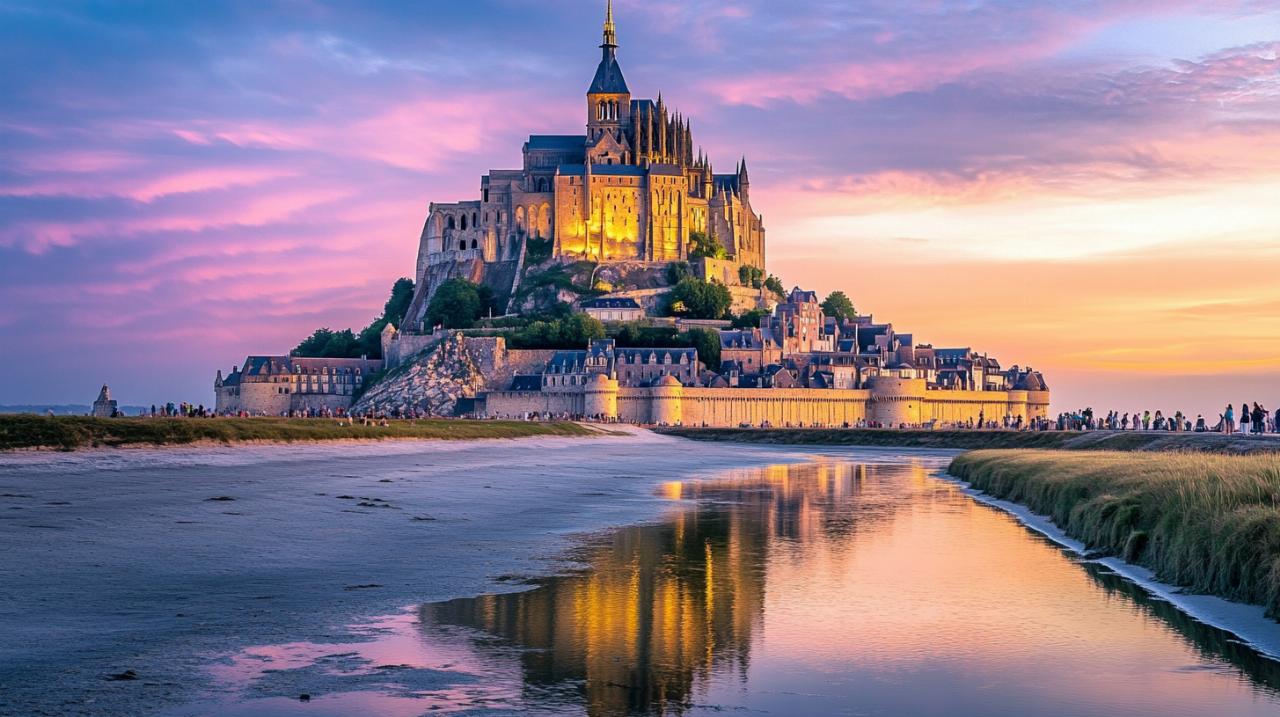
Rising dramatically from the tidal flats where Normandy meets Brittany, Mont Saint-Michel remains one of Europe's most extraordinary UNESCO heritage sites. This rocky island crowned by a magnificent abbey appears to float between sea and sky, depending on the tides that twice daily transform its surroundings. The medieval streets wind upward through the fortified village, where narrow passageways lined with stone houses lead pilgrims and tourists alike towards the abbey perched at the summit. The architectural marvel combines Romanesque and Gothic elements, its soaring spires reaching heavenward whilst its foundations grip the granite outcrop with remarkable tenacity. Visitors who time their arrival with the changing tides witness one of nature's most spectacular performances, as waters rush across the bay at speeds that have captured imaginations for over a millennium. The abbey's cloisters offer moments of contemplation, whilst the ramparts provide breathtaking views across the bay towards the distant coastline.
The bayeux tapestry museum: unveiling norman conquest narratives
In the heart of Bayeux, a remarkably preserved medieval town, resides one of the world's most significant historical artefacts. The Bayeux Tapestry stretches for seventy metres, its embroidered scenes narrating the events leading to the Norman Conquest of England in the eleventh century. This extraordinary piece of needlework serves not merely as decorative art but as a primary historical source, depicting battles, coronations, and the everyday life of Norman society with vivid detail. The museum housing this treasure provides context through multimedia presentations that bring the embroidery's complex narrative to life, allowing visitors to understand the political intrigue and military strategy that culminated in the Battle of Hastings. Beyond the tapestry itself, Bayeux rewards exploration with its stunning cathedral, a masterpiece of Norman Gothic architecture that towers over the surrounding streets. The town's preserved medieval quarter invites leisurely strolls past half-timbered houses and along cobbled lanes that have witnessed centuries of history. Nearby, the British War Cemetery serves as a poignant reminder of more recent conflicts, creating a powerful juxtaposition between medieval conquest and modern liberation.
Château-Gaillard stands as another testament to medieval military architecture, perched high above the Seine near Les Andelys. This formidable fortress was constructed by Richard the Lionheart in the twelfth century to defend Normandy against French advances. Though now in ruins, the castle's strategic position offers stunning views across the river valley, whilst its remaining walls and towers demonstrate the sophisticated defensive techniques of the period. Walking through the remnants of this once-impregnable stronghold, visitors gain insight into medieval warfare and the territorial disputes that shaped European history.
Commemorative sites and world war ii history
Few regions bear the marks of the Second World War as profoundly as Normandy, where the Allied invasion of June 1944 turned the tide of European conflict. The beaches, museums, and memorials scattered along the coast serve as solemn reminders of the sacrifice made for freedom.
Omaha Beach and the D-Day Landing Beaches: Echoes of Liberation
The stretch of coastline known collectively as the D-Day landing beaches extends from Utah Beach in the west to Sword Beach in the east, each sector bearing witness to the largest amphibious invasion in military history. Omaha Beach, where American forces faced the fiercest resistance, remains the most visited of these historic shores. Today, the sand appears peaceful, marked only by the tides and the footprints of contemplative visitors, yet the cliffs above still bear scars from the intense bombardment. Standing on this beach, one cannot help but reflect on the courage required to storm these heavily defended positions under withering fire. The nearby American Cemetery at Colleville-sur-Mer presents row upon row of white crosses and Stars of David, each marking the final resting place of a soldier who made the ultimate sacrifice. The memorial's position overlooking Omaha Beach creates a powerful connection between the hallowed ground and the site of battle. Further along the coast, the remains of the Mulberry harbour at Arromanches demonstrate the engineering ingenuity that enabled the invasion's success, with massive concrete caissons still visible at low tide.
Museums and Memorials Honouring the Second World War
Caen, the historic capital of Lower Normandy, houses the Memorial Museum for Peace, an institution dedicated to exploring the causes and consequences of the Second World War. Through comprehensive exhibitions, the museum examines not only the military campaigns but also the civilian experience of occupation and the broader context of twentieth-century conflict. Interactive displays and preserved artefacts bring history to life for visitors of all ages, making this family-friendly destination both educational and moving. The city itself bears the marks of wartime destruction and post-war reconstruction, with modern architecture standing alongside the monumental abbeys founded by William the Conqueror and his wife Matilda. These twin religious institutions, the Abbaye aux Hommes and the Abbaye aux Dames, represent Norman Romanesque architecture at its finest, their austere beauty providing spiritual counterpoints to the military history that surrounds them. Cherbourg, at the tip of the Cotentin Peninsula, played a crucial role as the first major port liberated by Allied forces. The Cité de la Mer museum now occupies the former transatlantic terminal, its exhibits exploring maritime history from the age of ocean liners to deep-sea exploration, whilst the nearby Liberation Museum recounts the peninsula's wartime experiences.
Natural splendour and unesco world heritage treasures
Beyond its historical monuments, Normandy captivates visitors with landscapes of remarkable diversity, from dramatic coastal formations to pastoral countryside where apple orchards produce the region's famous cider.
Regional Natural Parks and Coastal Landscapes of Normandy
The white chalk cliffs of Étretat rank among France's most photographed natural wonders, their distinctive arches and needle-like formations sculpted by millennia of wave action. Artists including Claude Monet immortalised these formations in paintings that capture the changing light across the limestone faces, and contemporary visitors find the views no less inspiring. The clifftop paths offer exhilarating walks with panoramic vistas across the English Channel, whilst the beach below provides opportunities to appreciate the geological forces at work. Further east along the Côte d'Albâtre, Dieppe maintains its character as a working fishing port, its morning markets offering the freshest catches alongside the traditional scallops and oysters for which Norman gastronomy is renowned. The rugged terrain of La Suisse Normande, despite its name suggesting Alpine grandeur, presents a more intimate landscape of steep valleys carved by the River Orne. This area attracts outdoor enthusiasts seeking activities such as rock climbing, kayaking, and hiking through forests and gorges that feel worlds away from the coastal resorts. The Pays d'Auge represents quintessential Norman countryside, its rolling hills dotted with half-timbered farmhouses and orchards that supply the region's cider houses and cheese producers. Following the Camembert route through this picturesque region offers encounters with artisan producers who maintain traditional methods, their products embodying the terroir that makes Norman gastronomy distinctive.
Planning Your Journey: Guided Tours and Excursions from Paris
Giverny, though geographically on Normandy's border, draws countless visitors to the gardens where Claude Monet found endless inspiration for his water lily paintings. The property combines formal flower beds with the famous Japanese bridge and pond, creating living compositions that change with the seasons. Spring brings explosions of tulips and wisteria, whilst summer sees the water garden at its lush peak, the reflections on the pond's surface echoing the artist's masterworks. Rouen, the historic capital of Normandy, offers a wealth of medieval architecture including the Gothic cathedral that Monet painted repeatedly to capture its façade under different lighting conditions. The city's preserved quarter features the Gros-Horloge, an astronomical clock spanning a Renaissance arch, and narrow streets where Joan of Arc met her tragic end. Le Havre presents a stark contrast with its modernist architecture, the city having been almost entirely rebuilt after wartime destruction according to designs by Auguste Perret. This urban landscape earned UNESCO recognition for its innovative use of concrete and rational planning. Honfleur's picturesque Vieux Bassin remains a magnet for artists and tourists alike, its tall narrow houses reflected in the harbour waters creating scenes of timeless charm. The town's art galleries and seafood restaurants cluster around the quayside, whilst the wooden church of Sainte-Catherine demonstrates shipbuilders' carpentry skills applied to sacred architecture.
The seaside resort of Deauville epitomises elegant coastal leisure with its Belle Époque villas, luxury hotels, and famous boardwalk lined with beach cabins bearing the names of film stars. Its neighbour Trouville offers a more relaxed atmosphere whilst sharing the same stretch of sandy beach along the Côte Fleurie. Granville combines coastal charm with cultural attractions including the Christian Dior Museum, housed in the fashion designer's childhood villa overlooking the sea. From this port, boats depart for the Chausey Islands, an archipelago of remarkable natural beauty where granite rocks and sandy beaches create a haven for seabirds and visitors seeking tranquillity. Le Haras du Pin, known as the Versailles for horses, showcases France's equestrian heritage through its classical architecture and continued function as a national stud farm, with tours and demonstrations celebrating the relationship between Normandy and horse breeding.
Most major sites lie within comfortable driving distance of each other, making Normandy ideal for exploration over several days. Whilst three days allows visits to Mont Saint-Michel, the D-Day beaches, and one or two historic towns, a week permits deeper immersion in the region's varied attractions. Spring and early autumn offer particularly pleasant conditions, with April through October generally providing the best weather for combining coastal visits with countryside exploration. Day trips from Paris reach Normandy's attractions via efficient train services to Rouen, Caen, and Bayeux, though having a vehicle provides greater flexibility for discovering hidden villages and rural landscapes. Guided excursions offer expertly curated itineraries for those preferring organised travel, particularly valuable for understanding the complex history of the D-Day operations. Accommodation options range from charming bed and breakfasts in converted farmhouses to luxury hotels in coastal resorts, ensuring visitors find lodging that suits their preferences and budgets.