
Vietnam's traditional attire tells a story of cultural richness, historical transformation, and enduring pride. From the elegant lines of the ao dai to the vibrant costumes of ethnic communities scattered across the northern highlands and the fertile plains of the Mekong River, these garments serve as living symbols of identity and heritage. Whether worn during family gatherings, professional settings, or major festivals, Vietnamese traditional dress continues to captivate both locals and visitors alike. Understanding these costumes offers a window into the nation's past, from the grandeur of the Nguyen Dynasty to the dynamic cultural landscape of contemporary Vietnam.
The ao dai: vietnam's iconic traditional dress
The Historical Significance and Evolution of the Ao Dai
The ao dai stands as the most recognisable and beloved garment in Vietnamese culture, embodying femininity, grace, and national identity. Originating in the 18th century during the Nguyen Dynasty, the design evolved from both Chinese and Cham influences, reflecting the rich tapestry of cultural exchange that has shaped the region. Initially, the garment was adapted to suit local tastes and climate, resulting in a distinctive silhouette that features a long tunic worn over silk or cotton trousers. The high collar denotes modesty and respect, whilst the deep splits running along each side of the tunic symbolise freedom and movement, allowing wearers to navigate daily activities with ease.
Throughout its history, the ao dai has undergone numerous transformations in response to political and cultural shifts. During the French occupation, the garment was modernised to feature a tighter fit that accentuated the wearer's figure, though it retained the traditional loose trousers that ensure comfort and practicality. By the time of the Vietnam War, the ao dai had become a powerful emblem of national pride, worn by women as a statement of cultural resilience. The choice of fabric also varies significantly depending on the occasion and region. Luxurious silk and brocade are reserved for special events and ceremonies, whilst simpler cotton and linen are favoured for everyday wear, particularly in the warmer southern regions.
Colour plays an equally important role in the symbolism of the ao dai. Red, a hue deeply associated with luck and prosperity, is often chosen for weddings and festive celebrations. White conveys purity and is commonly seen in student uniforms and formal occasions, whilst yellow represents power and prestige, harking back to the royal courts of the past. Black, though sometimes associated with mourning, is also worn at formal events, adding an air of sophistication. These colours, combined with intricate embroidery and delicate patterns, make each ao dai a unique expression of personal and cultural identity.
The Ao Dai in Contemporary Vietnamese Society and Tourism
In modern-day Vietnam, the ao dai maintains its relevance despite the prevalence of Western fashion in urban centres such as Hanoi and Ho Chi Minh City. It is not uncommon to see the garment worn by students, teachers, and professionals, serving as both a uniform and a symbol of cultural continuity. The ao dai has also captured the attention of international audiences, appearing in global fashion shows and cultural exhibitions. A notable moment came in 2002 when a Vietnamese contestant wore a golden ao dai at the Miss Universe pageant, significantly raising the garment's international profile and sparking renewed interest in Vietnamese traditional dress.
Contemporary designers have embraced the challenge of keeping the ao dai relevant by introducing modern cuts, bold patterns, and innovative fabrics. These updates ensure that the garment appeals to younger generations whilst respecting its historical roots. In cities like Hoi An, visitors can commission bespoke ao dai tailored to their measurements, experiencing firsthand the craftsmanship and artistry that go into each piece. The Precious Heritage Museum, also located in Hoi An, offers a comprehensive display of traditional attire from Vietnam's 54 ethnic groups, with the ao dai prominently featured as the centerpiece of the nation's cultural heritage.
Tourism plays a significant role in sustaining the popularity of the ao dai. Tailored travel experiences, such as those offered by leading tour operators, often include cultural tours that highlight the significance of traditional dress. Visitors are encouraged to try on the ao dai, participate in photography sessions, and learn about the garment's history and symbolism. Such activities not only enrich the travel experience but also contribute to the preservation of Vietnamese cultural traditions. Food tours and nature tours frequently incorporate stops at local markets and artisan workshops where traditional fabrics and garments are produced, offering a deeper appreciation for the skill and dedication required to maintain these age-old practices.
Regional variations: traditional costumes across vietnam's ethnic groups
Northern vietnam: ethnic minority dress and cultural identity
Vietnam's cultural diversity is nowhere more evident than in the traditional costumes worn by its ethnic minority communities, particularly those in the northern regions such as Ha Giang and Sapa. These areas are home to numerous groups, each with its own distinctive attire that reflects centuries of tradition and local identity. The garments are characterised by vibrant colours, intricate embroidery, and the use of natural dyes derived from plants and minerals. Brocade, a richly decorative fabric, is especially popular in central and northern Vietnam, where it is woven with complex patterns that tell stories of the community's history and beliefs.
Each ethnic group has developed its own unique style, often influenced by the local environment and the materials available. For example, the Hmong people are known for their elaborate indigo-dyed clothing adorned with geometric patterns and silver jewellery, whilst the Red Dao favour bright red headscarves and embroidered tunics. These garments are not merely decorative but serve as markers of social status, age, and marital status within the community. The act of creating these costumes is itself a cultural practice, with skills passed down through generations, ensuring that the knowledge and artistry are preserved for future generations.
Visitors to northern Vietnam are often struck by the visual splendour of these traditional costumes, especially during local festivals and markets. Cultural tours that focus on ethnic minority communities offer travellers the opportunity to witness traditional weaving techniques, participate in dyeing workshops, and even try on the garments themselves. These experiences provide a deeper understanding of the role that traditional dress plays in maintaining cultural identity and continuity. Photographers, including renowned artists such as Réhahn, have captured the essence of these communities through their lenses, highlighting the beauty and diversity of Vietnam's ethnic heritage.
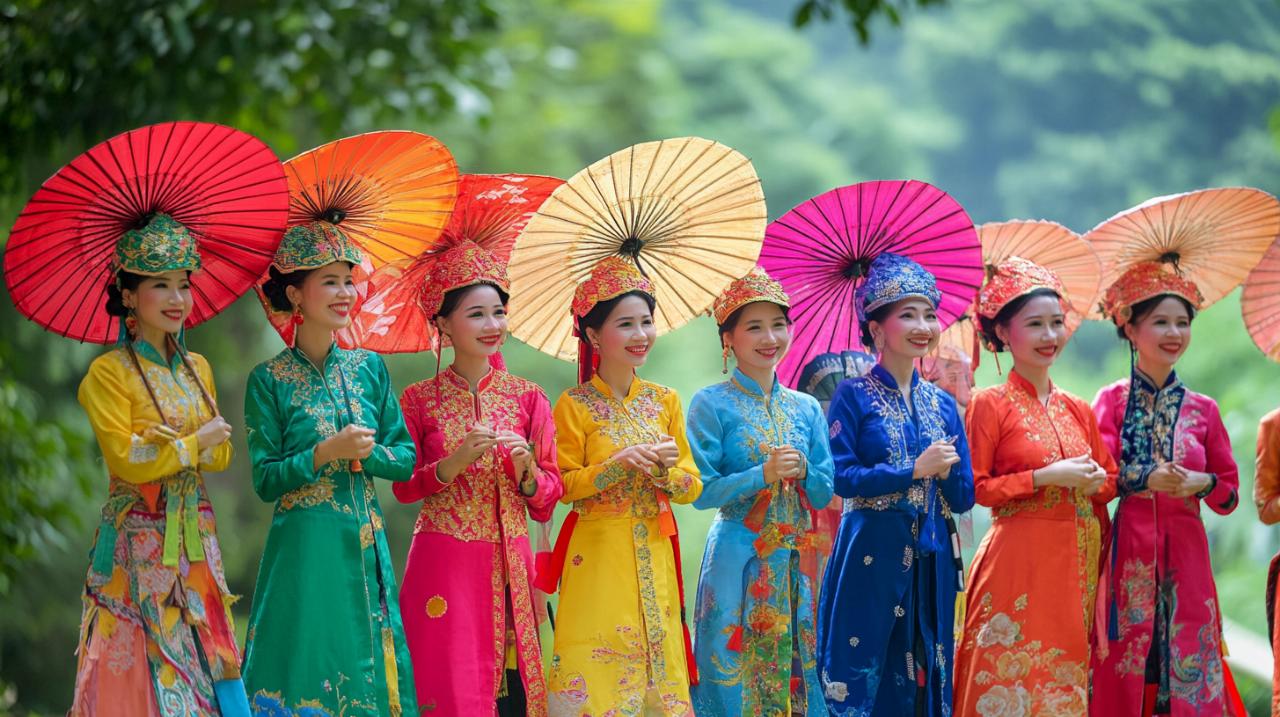
The Mekong Delta and Nhat Binh: Unique Traditional Attire for Celebrations
The southern regions of Vietnam, particularly the Mekong Delta and areas such as Nhat Binh, offer a different perspective on traditional costume. Here, the climate and lifestyle have influenced the development of lighter, more practical garments suited to the humid, tropical environment. Cotton and linen are commonly used, providing comfort and breathability. Traditional attire in these areas is often seen during family gatherings, weddings, and festivals, where it serves as a visual expression of cultural pride and continuity.
During celebrations, the colours and styles of the garments become even more pronounced. Red and gold dominate the palette, symbolising prosperity and good fortune. Women may wear variations of the ao dai in brighter hues, whilst men don traditional tunics paired with loose trousers. The designs are often simpler than those found in the north but no less meaningful, with each element reflecting local customs and beliefs. The emphasis is on comfort and practicality, allowing participants to engage fully in the festivities without being hindered by overly elaborate clothing.
The Mekong River itself has long been a conduit for cultural exchange, bringing together diverse influences from Cambodia, Laos, and beyond. This has resulted in a rich tapestry of traditional attire that incorporates elements from neighbouring cultures whilst retaining a distinctly Vietnamese character. River cruises along the Mekong often include stops at local villages where visitors can observe traditional crafts, including the production of woven textiles and embroidered garments. These experiences offer a glimpse into the daily lives of the people who call this region home and underscore the importance of traditional dress in maintaining cultural heritage.
The nguyen dynasty's influence on vietnamese traditional costume
Royal Court Dress: Heritage from the Nguyen Era
The Nguyen Dynasty, which ruled Vietnam from the mid-18th century until the early 20th century, left an indelible mark on the nation's cultural and sartorial traditions. The royal court in the ancient capital, now a major historical site, was a centre of art, culture, and fashion. Court dress during this period was characterised by opulence and strict adherence to protocol, with each garment reflecting the wearer's rank and role within the imperial hierarchy. The use of luxurious fabrics such as silk and brocade, combined with intricate embroidery and gold thread, created garments that were as much works of art as they were functional attire.
The influence of the Nguyen Dynasty extended beyond the royal court, shaping the broader aesthetic of Vietnamese traditional dress. The ao dai, as it is known today, owes much of its elegance and structure to the design principles established during this era. The high collar, long tunic, and flowing trousers were all elements refined by court artisans and tailors, who sought to create a garment that was both modest and regal. The use of colour was also codified, with certain hues reserved for royalty and high-ranking officials, whilst others were deemed appropriate for commoners.
Today, remnants of this imperial heritage can be seen in the formal ao dai worn during state occasions, weddings, and cultural festivals. Museums and historical sites across Vietnam display examples of royal court dress, offering visitors a chance to appreciate the craftsmanship and artistry of the Nguyen era. These exhibitions serve as a reminder of the enduring legacy of the dynasty and its contribution to the nation's cultural identity. The garments are often accompanied by artefacts such as jewellery, footwear, and accessories, providing a comprehensive view of the splendour that characterised court life.
Preserving traditional attire: from family gatherings to modern festivals
Preserving traditional attire is a priority for many Vietnamese families and cultural organisations, who see these garments as vital links to the past. Family gatherings, particularly during the Lunar New Year and other significant festivals, are occasions when traditional dress is brought out and worn with pride. These events serve not only as celebrations of family and heritage but also as opportunities to pass down knowledge about the meaning and significance of each garment. Elders often share stories about the origins of particular designs, the symbolism of colours, and the techniques used to create the intricate embroidery that adorns the fabric.
Modern festivals have also embraced traditional attire, with many events featuring parades and competitions that showcase the diversity of Vietnamese costume. In major cities such as Hanoi and Ho Chi Minh, cultural festivals attract both locals and tourists, who come to admire the vibrant displays of traditional dress. These festivals often include workshops and demonstrations where visitors can learn about the processes involved in creating traditional garments, from dyeing and weaving to embroidery and tailoring. Such initiatives help to keep traditional crafts alive and ensure that future generations have the skills and knowledge to continue these practices.
Educational institutions and museums also play a crucial role in preserving traditional attire. Schools across Vietnam often require students to wear the ao dai as part of their uniform, reinforcing its status as a symbol of national identity. Museums such as The Precious Heritage Museum in Hoi An offer immersive exhibitions that highlight the traditional dress of Vietnam's 54 ethnic groups. These institutions provide a space for research, conservation, and public engagement, ensuring that the rich heritage of Vietnamese traditional costume is not only preserved but also celebrated. The work of photographers and artists, who document the beauty and diversity of these garments, further contributes to the global appreciation of Vietnam's cultural legacy.