
The paradox of Greenland's name has puzzled travellers and historians for centuries. Despite being covered by a vast ice sheet that blankets approximately eighty per cent of its landmass, this Arctic territory carries a moniker that evokes lush meadows and verdant landscapes. The explanation for this geographical irony lies not in the island's current climate, but in a deliberate act of Viking marketing from more than a millennium ago, combined with the dramatic environmental shifts that have shaped the region's history and continue to transform it today.
The viking legacy: erik the red's clever marketing strategy
Erik's Settlement and the Origins of Greenland's Misleading Name
The story of Greenland's name begins with Erik the Red, a Norse explorer who arrived on the island's shores around the year 982. Banished from Iceland following accusations of manslaughter, Erik ventured westward and discovered a land that, whilst certainly not tropical, offered pockets of habitable terrain along its southwestern coast. The period during which Erik established his settlement coincided with what historians now refer to as the Medieval Warm Period, a time when temperatures across the North Atlantic region were notably higher than they would be in subsequent centuries. During this era, the coastal areas of Greenland supported grass and low vegetation, providing grazing land for livestock and making Norse farming practices viable, albeit challenging.
Erik's choice of name was anything but accidental. Understanding that successful colonisation required attracting fellow Viking settlers from Iceland and Norway, he deliberately selected an appealing designation that would capture the imagination of potential emigrants. By calling the territory Greenland, he positioned it as a land of opportunity and fertility, a stark contrast to the harsh reputation that might have deterred settlement. This marketing strategy proved effective, as Erik managed to establish colonies that would persist for several centuries, with populations reaching into the thousands at their peak. The Norse sagas recount how Erik's promotional efforts painted Greenland as a promising frontier, downplaying the ice-covered interior whilst emphasising the habitable fjords and coastal valleys.
Norse Sagas and the 10th Century Colonisation Efforts
The Norse sagas provide valuable insights into the colonisation efforts that followed Erik's initial landing. These medieval texts describe the establishment of two main settlements along Greenland's western coast, where Viking settlers built farms, churches, and trading posts. Archaeological evidence confirms that these communities thrived during the warmer centuries between 800 and 1300, raising sheep, cattle, and even growing limited crops. The settlers maintained contact with Iceland and Norway, exporting walrus ivory, furs, and other Arctic goods that were prized in European markets.
However, the naming paradox becomes even more apparent when compared with Iceland, Greenland's neighbour to the east. Despite its forbidding name, Iceland benefits from the warming effects of the Gulf Stream, which keeps its climate approximately six degrees Celsius warmer than Greenland's. Roughly eleven per cent of Iceland is covered by ice, with the Vatnajökull glacier standing as Europe's largest ice cap, yet the island supports extensive vegetation and a temperate coastal climate. The contrast between the two islands' names and their actual conditions has led to persistent speculation about whether the Norse deliberately swapped the names to discourage settlement in the more hospitable Iceland whilst promoting the harsher Greenland. Whilst this theory remains popular, historical evidence suggests that naming customs and marketing considerations offer a more plausible explanation than any coordinated deception.
Greenland's dual identity: bridging danish and inuit heritage
The Kingdom of Denmark's Political Relationship with Greenland
The political landscape of Greenland shifted dramatically in the centuries following Norse colonisation. As temperatures dropped and the Norse settlements eventually disappeared during the fifteenth century, Inuit peoples continued to inhabit the island, having arrived from North America centuries earlier. European interest in Greenland was rekindled in the eighteenth century when Denmark-Norway began establishing colonial outposts. This marked the beginning of a relationship that continues to shape Greenland's governance and international status today.
Greenland currently exists as a constituent country within the Kingdom of Denmark, a political arrangement that grants the territory significant autonomy whilst maintaining connections to Copenhagen. This relationship has evolved considerably over the decades, particularly following the Second World War, when Greenland's strategic importance became apparent to both Denmark and other nations. In 1979, Greenland achieved home rule, gaining control over most domestic affairs, and in 2009, this was expanded to self-government, giving the territory authority over additional areas including mineral resources and justice. Despite this autonomy, Denmark retains responsibility for defence and foreign policy, and Greenland receives substantial financial support from the Danish government.
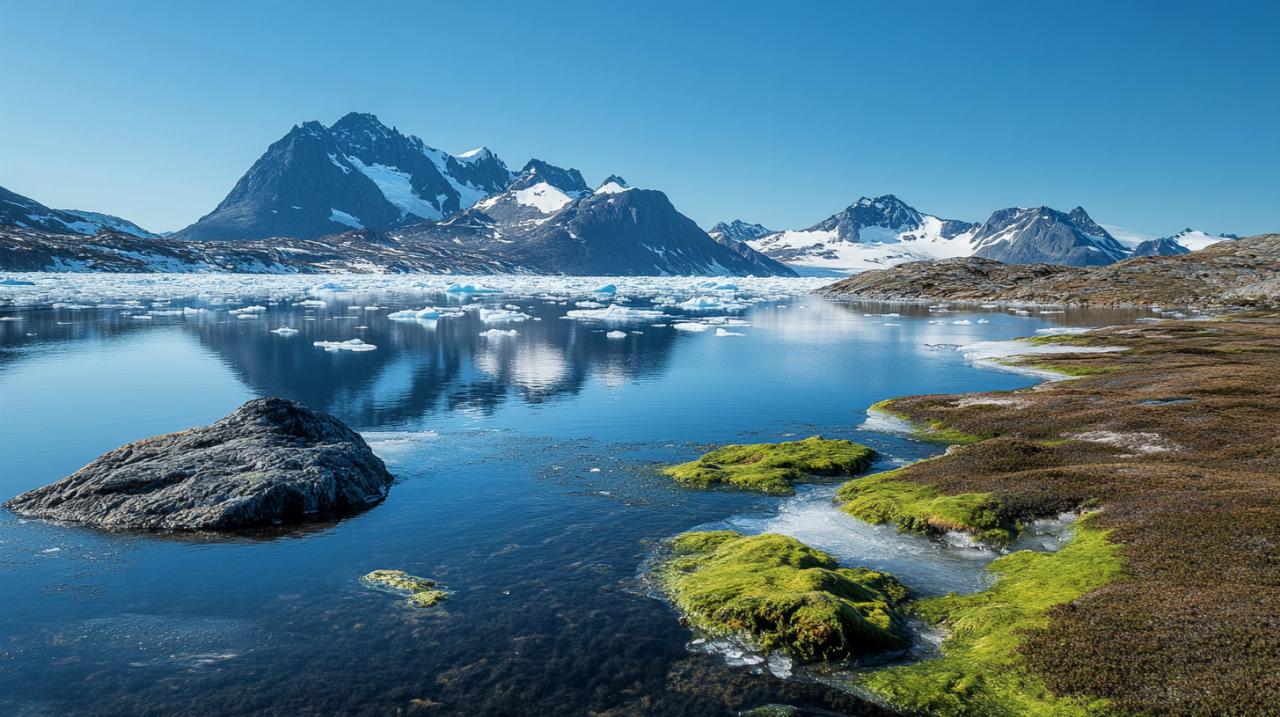
Greenlandic language, culture and local governance today
The cultural identity of modern Greenland reflects both its Inuit heritage and centuries of Danish influence. The Greenlandic language, known as Kalaallisut, became the sole official language in 2009, replacing the previous co-official status it shared with Danish. This linguistic shift represents a conscious effort to assert indigenous identity and cultural independence, though Danish remains widely taught and used in government and commerce. The term Kalaallit Nunaat, meaning the land of the Kalaallit people, serves as the indigenous name for the territory and appears on official documents and maps alongside Greenland.
Local governance structures reflect this dual heritage, blending democratic institutions influenced by Danish political traditions with attention to indigenous priorities and values. The parliament, known as the Inatsisartut, exercises authority over education, healthcare, housing, and economic development, whilst navigating the challenges of governing a territory with a small, widely dispersed population. With only around 56,000 inhabitants scattered along the ice-free coastal regions, Greenland faces unique administrative challenges that require balancing traditional practices with modern governance needs.
Climate Change and the Melting Ice Sheet: Greenland's Environmental Transformation
Millions of Years of Arctic Ice Now Under Threat from Global Warming
The ice sheet that dominates Greenland's interior has existed for millions of years, serving as a frozen archive of Earth's climatic history and containing roughly eight per cent of the world's freshwater reserves. This massive formation, in some places more than three kilometres thick, has remained relatively stable throughout human history, but recent decades have witnessed unprecedented rates of melting. Satellite observations and field measurements confirm that Greenland is losing ice at an accelerating pace, with billions of tonnes disappearing annually. The causes of this dramatic transformation are directly linked to rising global temperatures driven by greenhouse gas emissions.
The warming affecting Greenland is occurring at approximately twice the global average rate, a phenomenon known as Arctic amplification. Summer temperatures have risen significantly since the late twentieth century, extending the melt season and increasing the area of the ice sheet experiencing surface melting each year. Whilst Greenland was indeed warmer during the Medieval Warm Period when Erik the Red established his colonies, current temperatures are rapidly approaching and in some regions exceeding those historical levels. Scientists project that continued warming could eventually expose significant portions of Greenland's interior, potentially revealing landscapes that have been buried beneath ice for hundreds of thousands of years.
Environmental and Political Implications for Greenland's Future
The environmental transformation underway in Greenland carries profound implications that extend far beyond the island itself. The melting ice sheet contributes measurably to global sea level rise, threatening coastal communities worldwide. Each millimetre of additional sea level translates to increased flooding risks for millions of people living in low-lying areas. Furthermore, the loss of reflective ice surface accelerates warming as darker rock and water absorb more solar radiation, creating a feedback loop that intensifies the melting process.
These environmental changes intersect with complex political considerations. As ice retreats, previously inaccessible mineral resources become economically viable to extract, raising questions about resource ownership, environmental protection, and economic development. Greenland's strategic location and natural resources have attracted international attention, with various nations expressing interest in the territory's future. The possibility of increased maritime access through Arctic shipping routes as ice cover diminishes adds another dimension to these geopolitical discussions. For Greenlanders themselves, climate change presents both challenges and opportunities, forcing difficult decisions about balancing economic development with environmental stewardship and cultural preservation.
The ironic possibility exists that Greenland may eventually live up to its name as temperatures continue to rise and vegetation expands into previously ice-covered areas. Meanwhile, some climate models suggest that disruption to ocean currents, particularly the Gulf Stream system, could paradoxically cause cooling in parts of the North Atlantic, potentially making Iceland less temperate. Such shifts would represent yet another twist in the long, complex story of how these two neighbouring islands came to bear names that seem precisely backwards, reminding us that climate is never static and that human perceptions of place are always subject to the inexorable forces of environmental change.