
Southeast Asia beckons travellers with a tapestry of vibrant cultures, ancient monuments and breathtaking natural scenery that seem tailor-made for the photographer's eye. For those planning an odyssey from the bustling streets of Hanoi to the timeless temples of Siem Reap, the choice between Vietnam, Cambodia and Laos can feel both thrilling and daunting. Each country offers distinct landscapes, rich traditions and unique photographic opportunities that promise to fill memory cards and inspire wanderlust. Whether you are drawn to the limestone karsts rising from emerald waters, the silent majesty of centuries-old temple complexes or the gentle rhythms of life along the Mekong River, this journey through three neighbouring nations will reward you with images and memories that last a lifetime.
Discovering vietnam's photographic gems: from hanoi's bustling streets to halong bay's limestone karsts
Vietnam captivates visitors with its dynamic contrasts, where frenetic urban energy collides with serene natural beauty. The country's long coastline, fertile deltas and dramatic mountain ranges create a photographer's paradise, offering endless vistas that change dramatically from north to south. From the moment you step into the chaotic charm of Hanoi to the tranquil majesty of Halong Bay, Vietnam reveals layers of visual storytelling that capture the essence of Southeast Asian life. The blend of French colonial architecture, bustling markets and UNESCO World Heritage landscapes ensures that every corner turned presents a new frame waiting to be captured.
Hanoi and ho chi minh city: capturing urban vietnamese culture through your lens
Hanoi, the capital of Vietnam, pulses with an energy that is both timeless and modern. The Old Quarter's narrow streets overflow with motorbikes, street vendors and centuries-old shophouses, creating a visual symphony of movement and colour. Early morning light filters through the steam of pho stalls, illuminating scenes of daily life that have remained largely unchanged for generations. The city's lakes, such as Hoan Kiem, offer peaceful respites where locals practice tai chi at dawn, providing serene compositions amidst the urban hustle. French colonial buildings stand as elegant reminders of Vietnam's complex history, their faded yellow facades contrasting beautifully with the vibrant red and gold of traditional Vietnamese architecture.
Further south, Ho Chi Minh City presents a different face of Vietnam's urban landscape. Once known as Saigon, this sprawling metropolis embodies the country's rapid modernisation whilst retaining pockets of historical charm. The Notre-Dame Cathedral Basilica and the Central Post Office showcase French colonial grandeur, their European lines sitting comfortably alongside bustling Vietnamese markets and street food scenes. The city's nightlife, riverside promenades and countless motorbikes create dynamic street photography opportunities. For those seeking to document contemporary Vietnamese life, Ho Chi Minh City offers a fast-paced, ever-changing canvas where tradition and modernity collide in fascinating ways.
Halong Bay and the Mekong Delta: UNESCO World Heritage Landscapes Worth Every Snap
Halong Bay stands as one of Vietnam's most iconic natural wonders, a UNESCO World Heritage site where thousands of limestone islands rise dramatically from emerald waters. These karst formations, sculpted by wind and water over millennia, create an otherworldly seascape that changes mood with the light. Sunrise and sunset transform the bay into a dreamscape of silhouettes and golden reflections, whilst misty mornings add an ethereal quality to photographs. Traditional wooden junks gliding between the islands provide perfect foreground elements, whilst hidden caves and floating fishing villages offer intimate glimpses into life on the water. The interplay of light, water and stone makes Halong Bay a destination that rewards patient photographers with images of timeless beauty.
The Mekong Delta presents an entirely different photographic experience, where the mighty river fans out into a labyrinth of waterways, rice paddies and floating markets. This lush region reveals the agricultural heart of Vietnam, where life revolves around the rhythms of the river and the seasons. Floating markets burst with colour as boats laden with fruits, vegetables and flowers converge in early morning commerce. Riverside villages showcase traditional stilt houses, whilst narrow canals shaded by coconut palms offer serene compositions. The delta's network of waterways provides endless opportunities to document rural Vietnamese life, from farmers tending rice fields to artisans crafting traditional goods. Hiring a car and driver allows travellers to explore the delta's hidden corners at a relaxed pace, accessing remote villages and photogenic locations that might otherwise remain out of reach.
Cambodia's Angkor Wat and Beyond: Unlocking Ancient Temples and Tonle Sap's Floating Villages
Cambodia's crown jewel, the temple complex of Angkor, draws photographers and historians from around the world to witness one of humanity's most magnificent architectural achievements. Beyond these ancient stones, Cambodia offers a window into traditional Southeast Asian life, where fishing communities thrive on vast inland lakes and rural landscapes remain largely untouched by mass tourism. The country's rich cultural heritage, shaped by centuries of Khmer civilisation, provides endless opportunities for visual storytelling. From the bustling streets of Siem Reap to the tranquil waters of Tonle Sap Lake, Cambodia rewards those who venture beyond the main tourist circuit with authentic encounters and stunning photographic moments.
Siem Reap's Temple Circuit: Photographing Sunrise at Angkor Wat and Hidden Temple Treasures
Siem Reap serves as the gateway to the Angkor Archaeological Park, a vast area encompassing dozens of temple ruins from the Khmer Empire. Angkor Wat itself, the largest religious monument in the world, offers photographers the quintessential Southeast Asian sunrise experience. As dawn breaks, the temple's distinctive towers are reflected in the lotus-filled ponds, creating mirror images that have become iconic symbols of Cambodia. The play of light across the temple's intricate bas-reliefs reveals stories of ancient mythology and historical battles, whilst the scale of the architecture inspires awe at every turn. Visiting during the early morning hours not only provides the best light but also allows for quieter moments before the crowds arrive.
Beyond Angkor Wat, the temple circuit reveals a wealth of photographic treasures. Ta Prohm, where massive tree roots embrace ancient stonework, creates a dramatic fusion of nature and architecture that appears frozen in time. Bayon Temple's enigmatic stone faces gaze serenely in all directions, their expressions changing subtly with the shifting light throughout the day. Smaller, less-visited temples such as Banteay Srei showcase exquisite carvings on a more intimate scale, whilst the remote jungle temples reward adventurous photographers willing to venture off the beaten path. A well-planned temple circuit, perhaps facilitated by hiring a car and driver, allows visitors to experience the full spectrum of Angkor's architectural wonders whilst capturing the interplay of light, stone and vegetation that makes each temple unique.
Tonle sap lake: documenting floating communities and traditional cambodian life
Tonle Sap, Southeast Asia's largest freshwater lake, undergoes a remarkable transformation with the seasons, expanding dramatically during the monsoon months and shrinking in the dry season. This ecological phenomenon supports floating villages where entire communities live in houses built on pontoons or stilts, rising and falling with the water level. These villages offer photographers a unique opportunity to document a way of life that has continued for generations, where schools, shops, temples and homes all float on the water. The warm afternoon light illuminates wooden structures weathered by sun and water, whilst children paddle between houses in small boats and fishermen cast their nets in timeless patterns.
Visiting Tonle Sap provides insights into traditional Cambodian life that contrast sharply with the stone monuments of Angkor. The lake's fishing communities depend entirely on the water's bounty, and their daily routines revolve around the rhythms of nature. Markets held on floating platforms showcase the day's catch, whilst Buddhist temples on stilts serve as spiritual centres for the water-bound population. The lake's vast expanse, particularly during sunset when golden light reflects off calm waters, creates photographic opportunities that capture both the beauty and resilience of these communities. Respectful engagement with local families can lead to powerful portrait opportunities that tell stories of adaptation, tradition and the intimate relationship between people and water in this remarkable landscape.
Laos Unveiled: Luang Prabang's Spiritual Serenity and the Mekong River's Timeless Beauty
Laos remains Southeast Asia's hidden gem, a landlocked nation where time seems to move at a gentler pace. The country's mountainous terrain, dotted with traditional villages and Buddhist temples, offers photographers a chance to capture scenes of profound tranquillity and spiritual beauty. Unlike its more developed neighbours, Laos retains an authenticity that appeals to travellers seeking deeper cultural connections and unspoiled landscapes. The Mekong River, which forms much of the country's western border and flows through its heart, serves as both highway and lifeblood, connecting remote communities and providing stunning scenic backdrops. For those willing to venture beyond the well-trodden paths of Vietnam and Cambodia, Laos delivers photographic rewards that feel increasingly rare in our rapidly changing world.
Luang prabang's unesco heritage charm: temples, almsgiving ceremonies and colonial architecture
Luang Prabang, nestled at the confluence of the Mekong and Nam Khan rivers, embodies the spiritual heart of Laos. This UNESCO World Heritage city preserves a remarkable collection of gilded temples, French colonial mansions and traditional wooden houses that create a harmonious architectural landscape. The city's compact centre encourages exploration on foot, where every street corner reveals photographic compositions that blend sacred and secular, ancient and colonial. The golden spires of Wat Xieng Thong, one of Laos's most significant monasteries, gleam against tropical skies, whilst the intricate mosaics and carved wooden details reward close inspection and careful framing.
The daily almsgiving ceremony, known as tak bat, offers one of Southeast Asia's most moving photographic experiences. Each dawn, hundreds of Buddhist monks walk silently through the streets in saffron robes, collecting offerings of sticky rice from kneeling devotees. This centuries-old tradition continues with remarkable consistency, creating moments of profound beauty and spiritual connection. Photographers must approach this ceremony with respect and sensitivity, maintaining proper distance and refraining from intrusive behaviour. The soft morning light, the vibrant orange of the monks' robes against the muted tones of the street, and the quiet reverence of the participants combine to create images that transcend mere documentation, capturing something essential about Lao culture and Buddhist practice.
Mekong river adventures: capturing remote villages and natural wonders along laos' lifeline
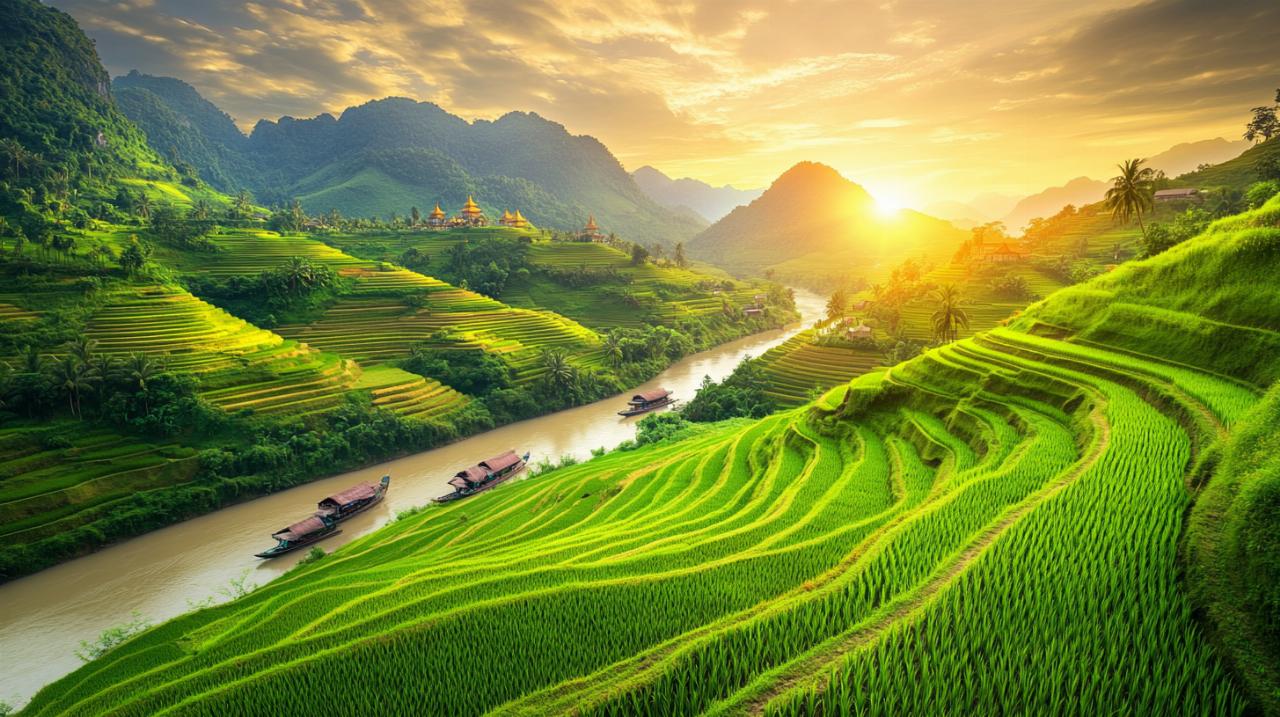
The Mekong River in Laos serves as much more than a geographical feature; it is the country's cultural and economic artery, connecting communities and providing endless photographic opportunities. Slow boat journeys between towns reveal landscapes of remarkable beauty, where limestone cliffs rise from the water's edge, dense jungle carpets the hillsides, and small villages cling to steep riverbanks. These river journeys offer photographers a moving vantage point from which to capture the ever-changing scenery, from fishermen casting nets at golden hour to children playing on sandy beaches exposed during the dry season. The pace of river travel allows for contemplation and connection with the landscape, creating opportunities for images that convey the timeless quality of life along the Mekong.
Venturing beyond Luang Prabang to more remote areas along the Mekong reveals traditional villages where hill tribes maintain customs and lifestyles that have changed little over generations. These communities, often accessible only by boat or rough mountain roads, offer authentic cultural encounters for respectful visitors. Markets in riverside towns burst with colour, displaying hand-woven textiles, fresh produce and traditional crafts that make compelling photographic subjects. Natural wonders such as the Kuang Si Falls, with its turquoise pools cascading through the jungle, provide stunning landscape opportunities that showcase Laos's natural beauty. Hiring a car and driver for longer journeys allows travellers to explore at their own pace, stopping at viewpoints and villages that commercial tours might bypass. The slower, more immersive approach to travel in Laos rewards photographers with images that capture not just what the country looks like, but how it feels to experience its gentle rhythms and enduring traditions.